Profiting from Most-Favored-Customer Procurement Rules: Evidence from Medicaid
American Economic Journal: Economic Policy 15(2), 2023, 166–197
Published version(PDF) · Journal version · Online appendix(PDF) · Replication code
Published version: Copyright American Economic Association; reproduced with permission.
How Do Most-Favored Customer Clauses Work?
Most-favored customer clauses (MFCC), or “best price” rules, are contract provisions that guarantee a buyer the lowest price offered to any other customer by the seller. MFCCs are common in government procurement. MFCCs can help lower government spending, but they also incentivize firms to keep prices higher in commercial markets to avoid triggering the clause.
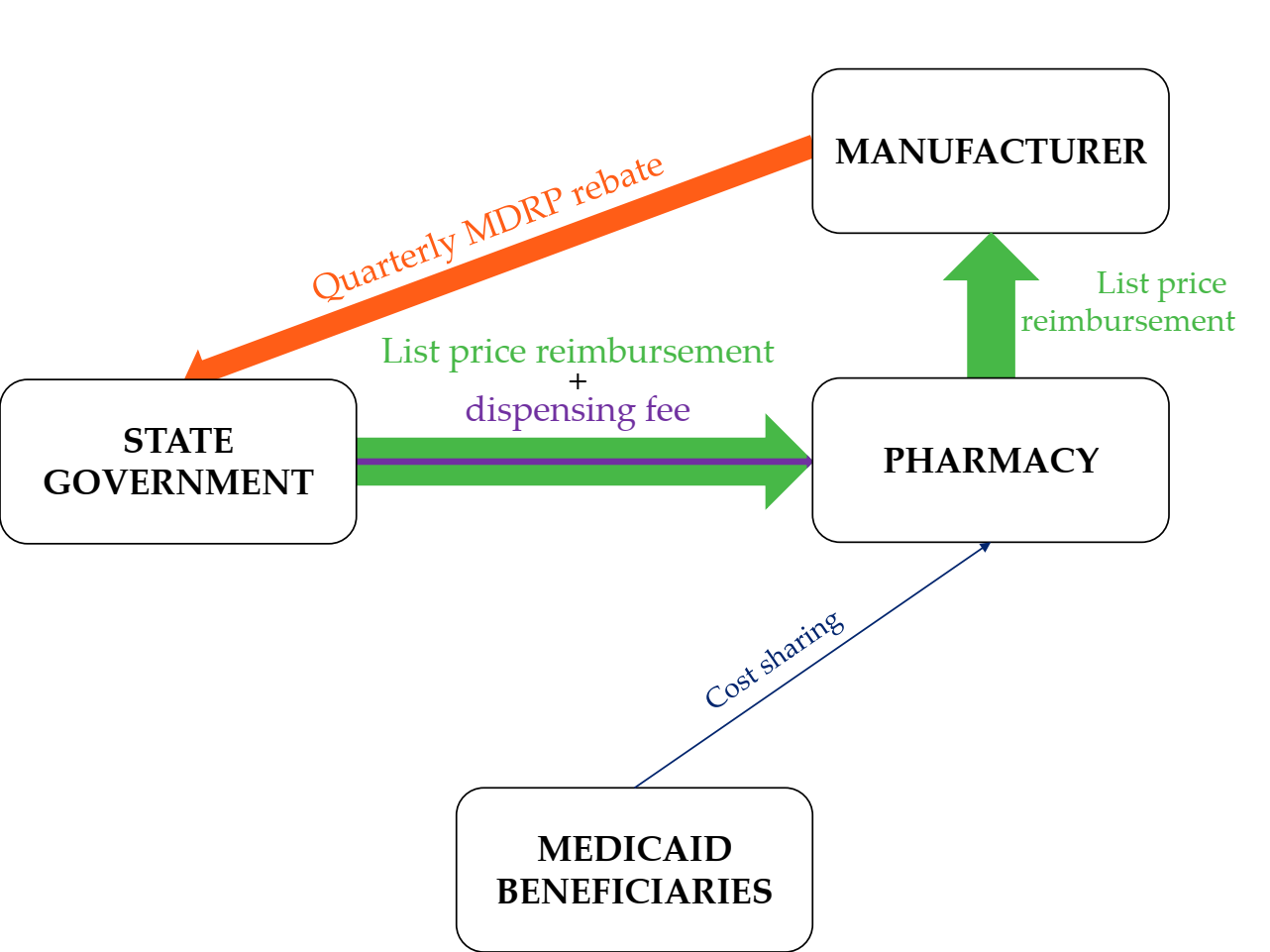
Overview of Medicaid Drug Pricing Rules
The Medicaid Drug Rebate Program uses an MFCC to ensure that Medicaid receives the biggest discount offered to any commercial payer. For each prescription given to Medicaid enrollees, drug manufacturers initially receive the Average Manufacturer Price (AMP), which is a measure of list price that does not consider rebates or discounts offered to commercial and public payers. Manufacturers then send state Medicaid programs a quarterly rebate with two components: a “basic rebate” equal to the highest rebate given to any commercial payer (but no lower than a minimum percentage—15.1% until 2009 and 23.1% starting in 2010), plus an “inflation penalty” equal to any list price growth above inflation since launch. As a result, the actual price paid by Medicaid for each unit is calculated as AMP times (1 - rebate).
How Does the Medicaid MFCC Affect Firm Revenue?
- Drug manufacturers negotiate rebates off of list price with large payers called pharmacy benefit managers (PBMs). Even though brand drugs are patent-protected, PBMs can leverage their market power in these negotiations to extract higher discounts and keep net prices below monopoly levels.
- The Medicaid MFCC makes it harder to obtain higher discounts. The best discount any commercial payer receives becomes Medicaid’s discount too, so a manufacturer that offers one payer a better deal must offer it to Medicaid as well.
- The MFCC only matters for discounts larger than Medicaid’s minimum rebate. A discount that crosses that threshold lowers the Medicaid price too. Manufacturers therefore keep their discounts below it, and commercial prices stay high.
- Increasing the minimum rebate threshold makes it easier for payers to extract higher discounts because it makes it harder to trigger the Medicaid MFCC.
Evaluating the ACA Reform
- In 2010, the ACA raised the minimum rebate threshold from 15.1% to 23.1%.
- Economic theory predicts that the reform had a bigger effect on drugs that receive a higher share of their revenue from Medicaid.
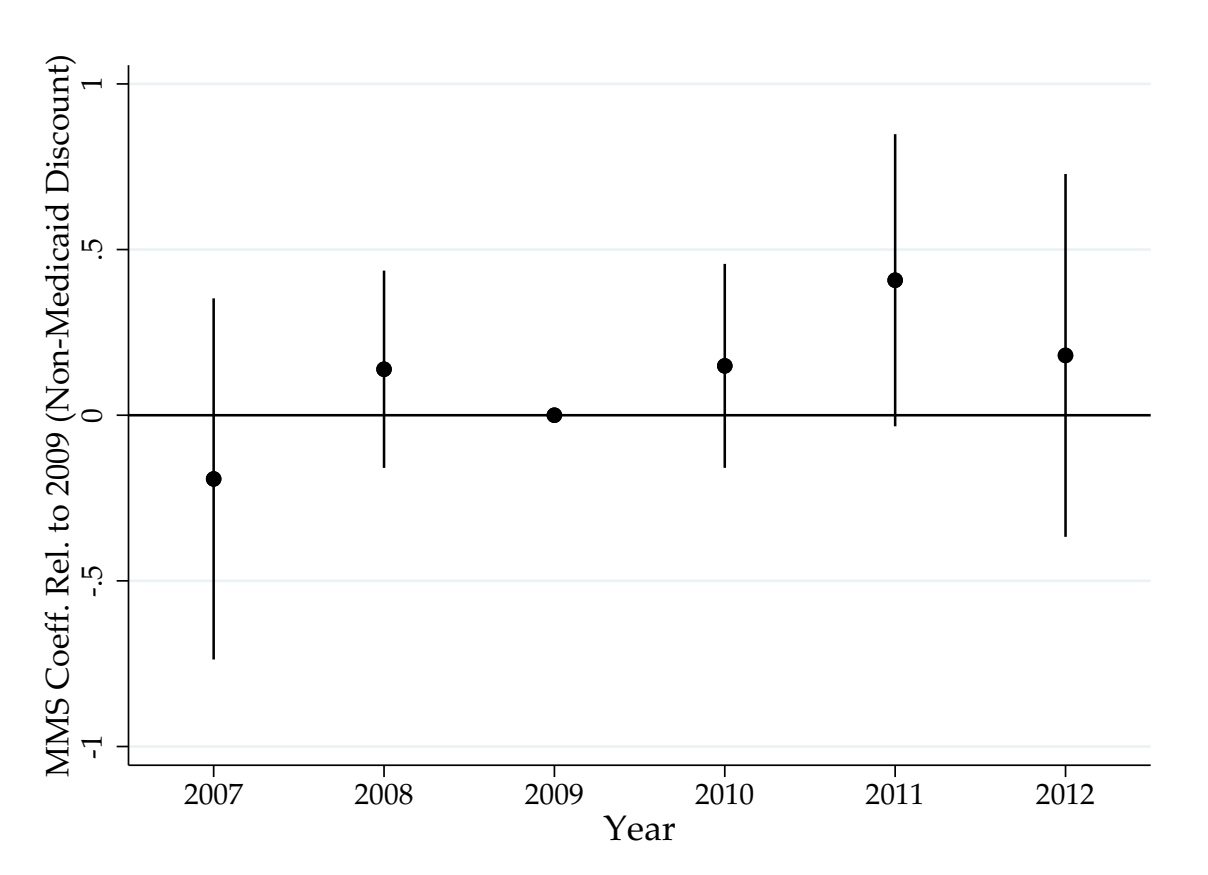
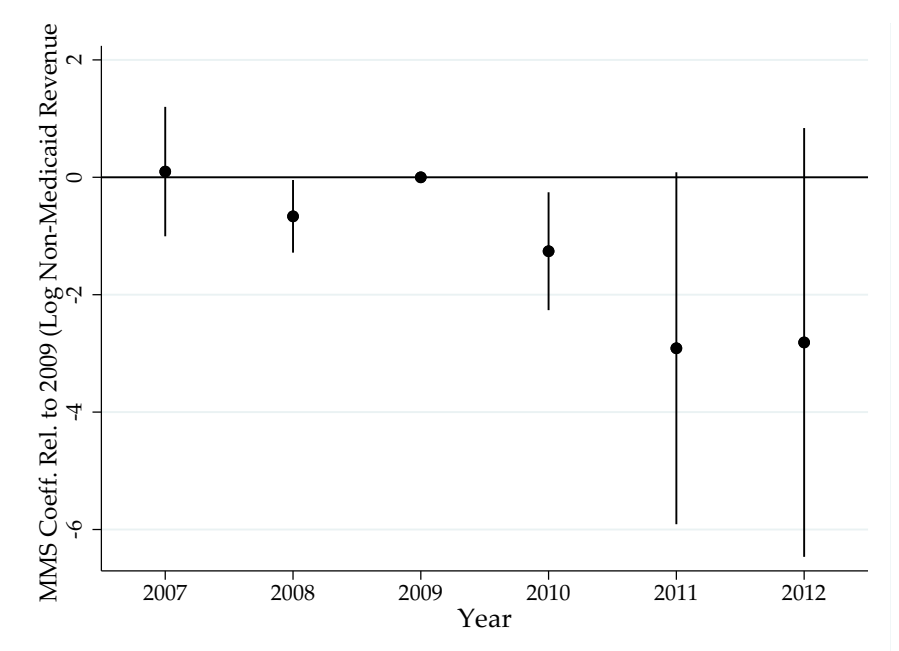
- Using a difference-in-difference framework based on differential exposure to the Medicaid market, we look for changes in average discounts and total revenue in non-Medicaid segments of the market. We find that discounts for drugs with a high Medicaid Market Share (MMS) increased after the reform.
- Our results imply that the ACA reform lowered prescription drug spending in the non-Medicaid market by approximately 2.5%.
- Using a model-driven calibration, we estimate that removing the MFCC altogether would further reduce non-Medicaid spending by 3.5%, though it would also likely increase Medicaid spending.
Key Takeaways
- We provide quasi-experimental evidence of the impact of Medicaid rules on the commercial drug market.
- Without data on net prices and revenue it would have been impossible to uncover the effect of the Medicaid MFCC on commercial market outcomes. This is important because most research on the pharmaceutical market uses invoice prices and sales numbers.
- The ACA rule change appears to have lowered drug spending for both Medicaid and commercial payers, although our analysis is limited to drugs already on the market. Drugs launching in the future have more flexibility in setting list prices and may be able to counteract the effects of the policy more effectively.